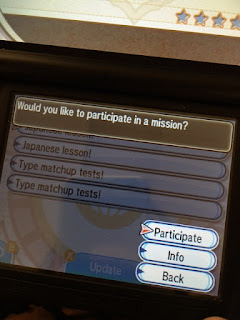
I have continued watching anime every week and shadowing various phrases. I have also started focusing on my listening skills and try to pay attention to vocabulary and conjugation of verbs and adjectives (usually they are casual form).
I have continued to self-study and review daily, practicing my speaking while doing vocabulary review. Every other week, I read various Japanese texts aloud even if I may not necessarily know the grammar or meaning (I'm trying to learn more kanji as I do this, too).
Unfortunately, I did not go to office hours or the language table near the end of the semester.
Goals Reflection:
I think my ability to have conversations on the spot has improved as well as my intonation and speed!
Of course, there's always room for improvement, so I will continue to practice when I can. Out of the 3 goals I had, I think I need to continue to focus on intonation and conversations "on the fly".
みなさん、こんにちは!サンクスギビングの休みはよかったですか?The holidays are nearly upon us, so this post is a about gift-giving in Japan.
Gift-giving Occasions
御歳暮(おせいぼ): Gifts that are given at the end of the year.
御中元(おちゅうげん): Mid-year/summer gift
バレンタインデーとホワイトデー: On バレンタインデー, women to give chocolates to men. The chocolates can be 本命(ほんめい)チョコ, the "chocolate of love" that is typically hand-made, or 義理(ぎり)チョコ, "obligatory chocolate." Men return the favor on ホワイトデー, March 14. Reciprocity is often seen in Japanese gift-giving culture.
ご祝儀(ごしゅぎ): At a Japanese wedding, this is gift money given to the couple. The average ご祝儀 is 30,000 JPY (about $300). It is also customary for the couple to give gifts to the guests, which is known as 引出物(ひきでもの)
手土産(てみやげ): A gift that is given when going to someone else's house. Traditional Japanese sweets such as どらやき、だいふく(もち) are common as 手土産。おいしいですね。たべたい…
Etiquette
Gifts should always be given and received with two hands.
It’s common for the recipient to decline a gift up to three times before accepting it.
Timing is important. If you just met someone and gave them a gift, it would seem like you are trying to rush the relationship.
Phrases to Use With all that we've learned so far, we can actually translate these phrases ourselves!
つまらないものですが…:The most formal way to give a gift.
たいしたものじゃないんですが…: This is a little more informal, but it is still rather polite.
これ、どうぞ:Less formal and should not be used with expensive gifts.
えんりょなくいただきます: This is said when accepting a gift. Its literal translation is something like "I humbly receive without hesitation"